
The shore at Big Shell Beach doesn't feel like sand. Your boots sink into a soft, rattling layer of shells—whole cockles the size of your palm, delicate coquinas in lavender and cream, spiraled whelks still holding their pearlescent sheen. The deposit shifts with every tide, so dense in places you won't find a grain of sand beneath your toes. Gulls wheel overhead, their shadows crossing the white expanse, while brown pelicans dive just beyond the breakers.
“The sheer density of shells—deposited by longshore currents unique to this bend in the coast—creates a beach surface unlike any other in Texas.”
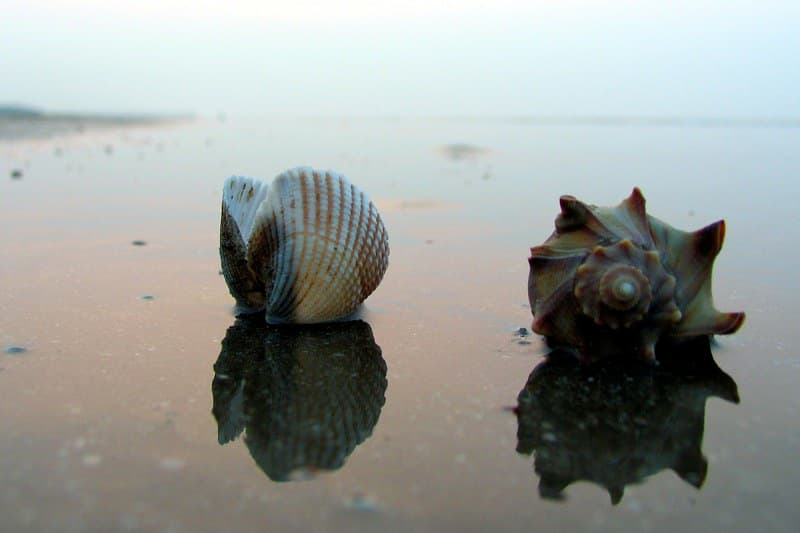 Credit: Flickr
Shells on Isle of Palms, looking east
Reaching this section of Padre Island National Seashore requires commitment. You'll drive fifteen miles down hard-packed sand from the park entrance, passing only the occasional surf-fisherman and nesting Kemp's ridley turtle zone. The beach access road ends, but Big Shell continues south, a ribbon of accumulated calcium carbonate that marks one of the richest shelling grounds on the Gulf Coast. Saltwater taffy-colored sunrise spills across the shells each morning, turning the beach into something between a jeweler's table and a paleontologist's dig.
The wind here never quite stops. It carries the smell of brine and sun-warmed shell, occasionally the sulfur hint of beached sargassum. By afternoon, the sand flats shimmer with heat, and you'll understand why the few visitors who make the drive arrive at dawn, bags in hand, searching for the perfect unbroken specimen among millions.


