

Port Bolivar Beach runs along the finger of land that marks the eastern guardian of Galveston Bay, a working-class shoreline where the Gulf meets industry without pretense. You park on the sand itself—four-wheel-drive pickups and sedans alike—and the waves roll in with a slow, muddy-brown tumble shaped by the outflow of the bay and the constant churn of freighters sliding toward Houston. Gulls wheel overhead, and the free ferry blasts its horn every twenty minutes as it shuttles between Bolivar and Galveston Island, close enough that you can see passengers waving from the rail.
“This is one of the only Texas beaches where a working ferry landing, active shipping lanes, and open Gulf shoreline converge in a single, unpretentious sweep.”
 Credit: Unsplash
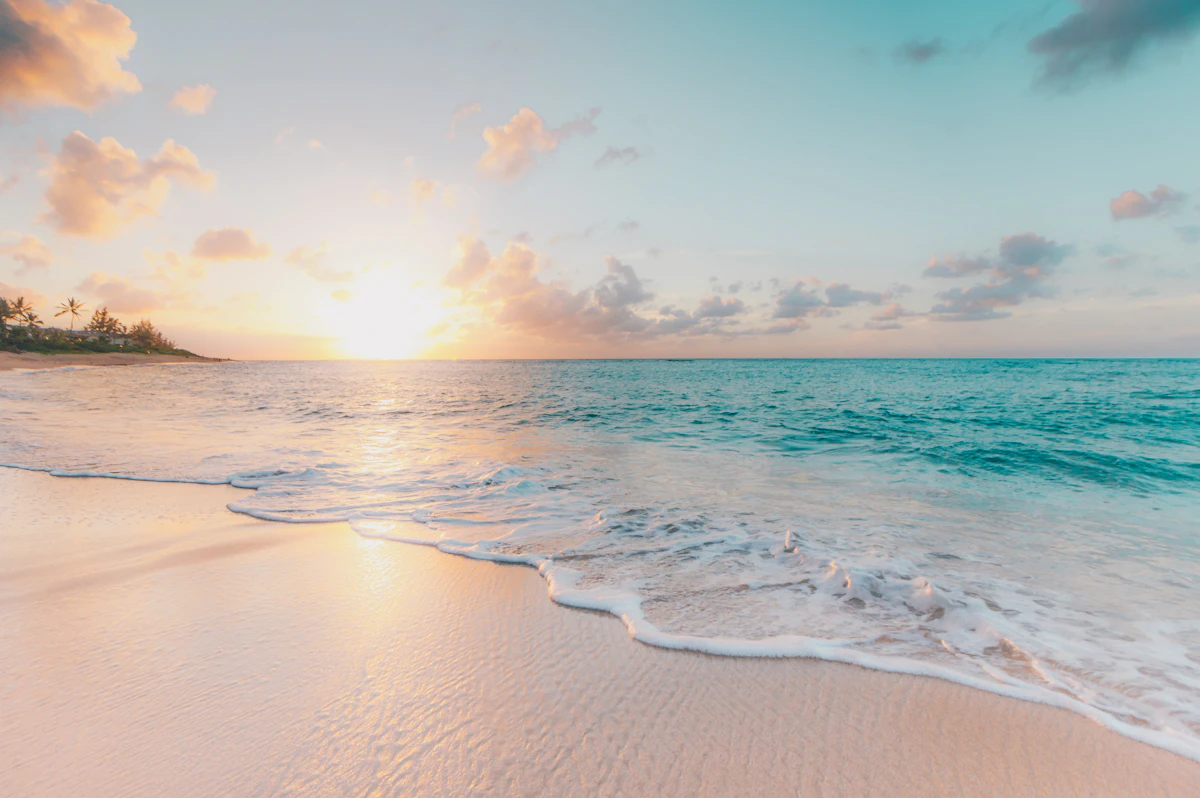
Aerial view of turquoise tropical bay
Families arrive with coolers packed with kolaches and Shiner Bock, setting up camp chairs just beyond the tide line where the sand firms up. Kids dig moats and chase ghost crabs while their parents cast surf rods baited with shrimp, hoping for redfish or bull sharks cruising the drop-off. The water stays warm most of the year, murky but swimmable, and the beach itself stretches long and empty enough that solitude is yours for the walking.
Come late afternoon, the sky ignites. The sun sinks behind the refineries and derricks of Texas City across the bay, turning the horizon into bands of crimson and burnt orange that reflect off the water in shimmering streaks. You sit in the sand, still warm beneath you, and watch the lights of the tankers blink on one by one as the day surrenders to the Gulf night.


