
Back Bay Beach occupies the southernmost reach of Virginia Beach, where the resort strip's high-rises give way to a protected wilderness corridor. You'll cross a low bridge over Back Bay itself—a 7,000-acre estuary where snow geese winter by the thousands—before reaching the narrow barrier island that holds the beach. The dunes rise tall and wild here, anchored by sea oats that whisper in the constant wind, and development stops abruptly at the refuge boundary.
“This is Virginia's only substantial stretch of Atlantic beachfront backed entirely by federally protected wildlife refuge rather than hotels or homes.”
 Credit: Flickr
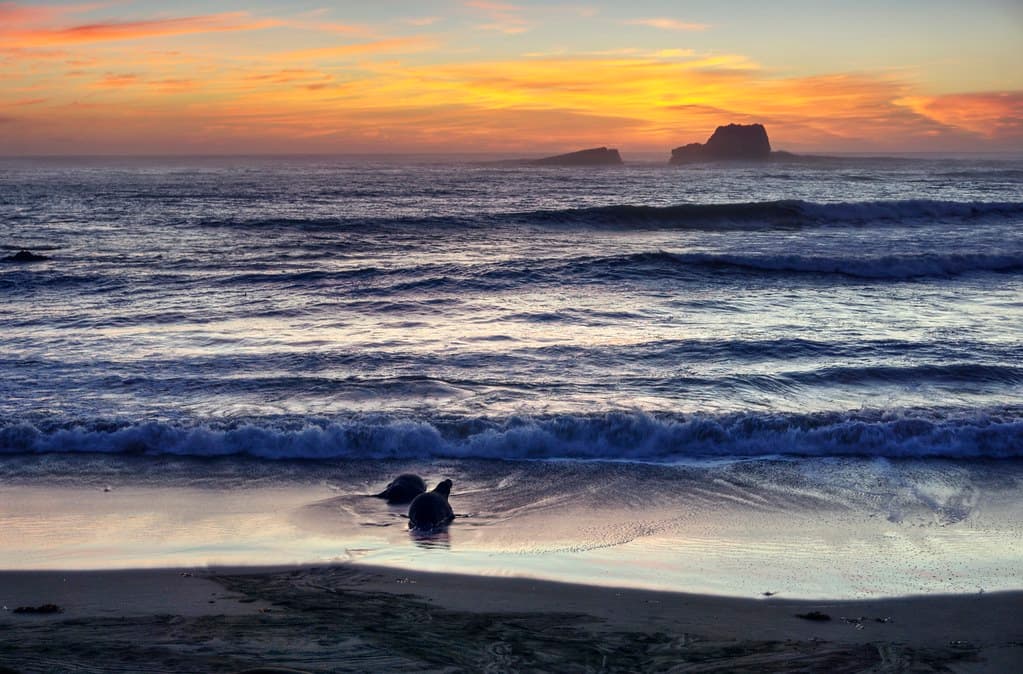
Blue hour at California coast
The beach stretches wide and flat at low tide, revealing sandbars where brown pelicans dive for menhaden. Walking south, you'll pass the occasional surf fisherman casting into the break, rod buried in a PVC holder, cooler at the ready. The water runs cooler than the resort beaches to the north, fed by currents that also deliver better waves and fewer swimmers. Shorebirds work the wrack line in tireless pursuit of coquina clams.
Back Bay National Wildlife Refuge manages the land behind the dunes, which means no boardwalks, no concession stands, no beach umbrellas planted in regimented rows. What you get instead: uninterrupted sight lines, the rhythmic pound of surf, and the possibility of spotting a loggerhead turtle nest marked with stakes and yellow tape during summer months. Bring what you need—the nearest services sit miles north.


