

The skiff rounds a headland draped in strangler figs, and suddenly the engine cuts. Ahead, a wedge of sand barely wider than two houses lies tucked between a river mouth and the sea, the water shifting from amber to slate green where currents collide. No road reaches this pocket of the Aragua coast; the jungle behind is too steep, the mangrove channels too tangled. You step onto beach that feels more riverbank than shoreline, driftwood logs bleached silver by salt and sun.
“One of the few Caribbean beaches where you swim in a living estuary, tasting both river and sea in the same stroke.”
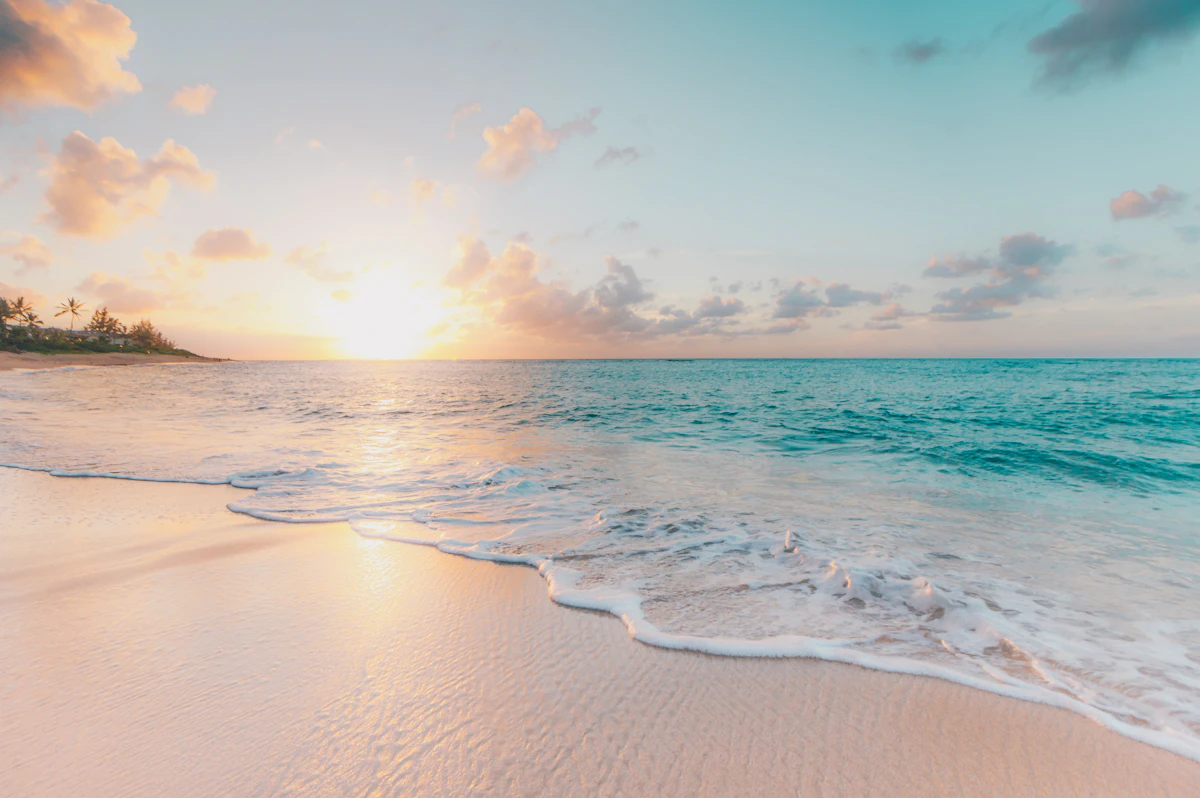 Credit: Unsplash
Aerial view of turquoise tropical bay
Wading out, you notice the water tastes faintly brackish—the river still asserting itself twenty metres from its mouth. Hermit crabs trace calligraphy across ribbed sand. A pair of black skimmers skim the surface film, lower mandibles slicing the glassy overlap where fresh meets salt. The air smells of leaf rot and brine in equal measure.
By midday, heat presses down through the canopy and the beach is yours alone. Howler monkeys bark from the ridge; a heron stalks the shallows. You swim in water that can't decide what it is—cool river current braiding through warmer sea—then dry off on a log still bearing the scars of last rainy season's flood. This is a beach that exists because two ecosystems refuse to stay separate.


